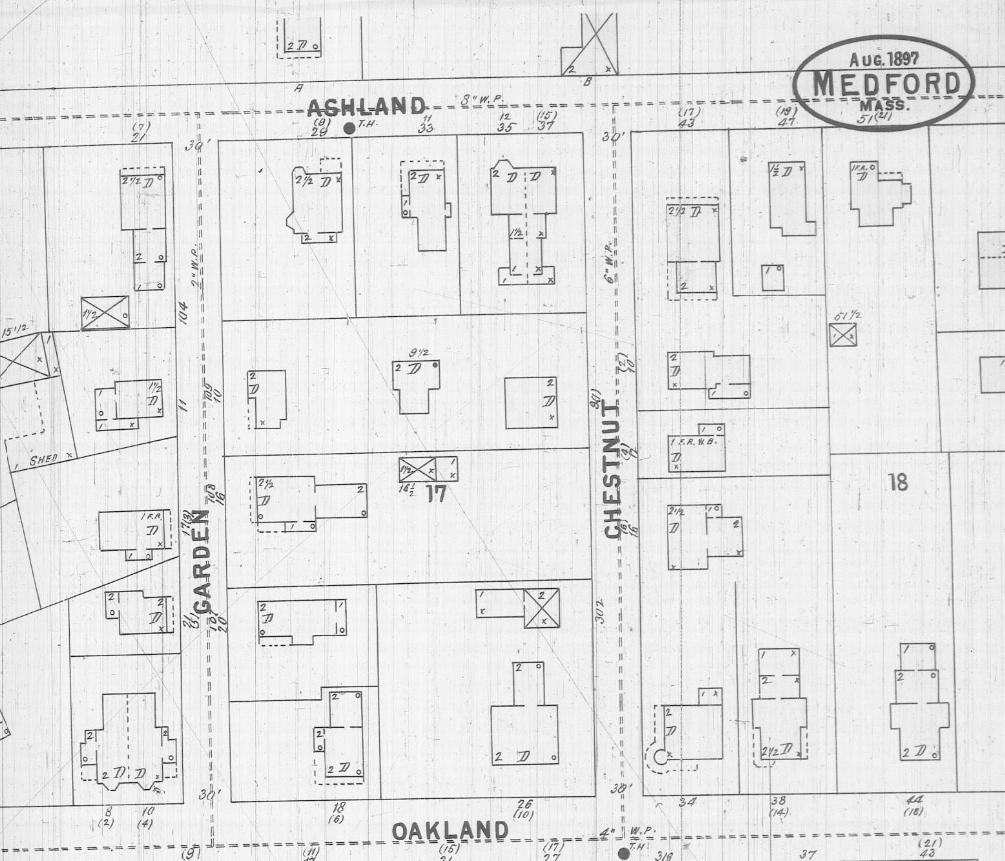
Last Throwback Thursday, I mentioned that in 1897 the Medford Mercury began running a weekly column called Theosophical Notes.
So what is Theosophy?
Theosophy grew straight out of Spiritualism, a séance movement that had swept America since 1848. The founding pledge of the Theosophical Society, founded in New York in 1875, was a brotherhood “without distinction of race, creed, sex, caste, or colour.” This mattered, in an era when mediumship was one of the very few platforms where a woman could speak publicly with authority. And instead of trying to reach one particular dead person on one particular night, it taught that “theosophy is not a purely speculative unpractical system, [but] a wondrous amalgam of Hindu subtleties, barren metaphysics and mystical phantasies combined with an infatuation for all things wonderful, miraculous and uncanny.” (Theosophical Notes, Medford Mercury, Friday, March 31, 1899, page 2 of 4, left-centre column)
So. Not seances, but rather, philosophy. But who was hosting this class gathering, who was printing these notes, this advertisement, for years?
Well, I started with an address. At the foot of the September 24, 1897 installment, I found this:
“An informal study class is held on Wednesday evenings between the hours of 7.30 and 9 o’clock, at 21 Ashland street. All are welcome.”
So, off went I to the city directories! The 1897 list of persons gives 21 Ashland Street as the home of Albert Hamilton.
(A wrinkle I almost fell into: Ashland Street was renumbered between 1894 and 1897, which I did not know when I started my search. Hamilton appears at number 7 in the earlier list, so I almost missed him. It was the same man, same house, but a different street address. Always match the year of the record to the year you’re asking about.)
I went next to find more information on his family. I was curious if it was Albert or someone else in the household that held the classes. I had heard that women largely drove the Spiritualist movement, so I decided to search the 1900 census. Their daughter caught my eye. Sarah Alice Hamilton, 36, single. Occupation: teacher. Was she the one who wrote the notes?
1897 to 1899 – the Theosophical Notes run weekly in the Mercury, and the Wednesday class ad runs until 1898. She is 33.
1899 – Albert retired in 1899 on account of ill health.
1900 – her listed occupation is teacher.
1901 – Albert passes away (see below for more on Albert)
1905 – her listed occupation is waitress
I am not certain that Alice wrote the column or taught that class. I couldn’t find a document that said so. What I do know is that the class met in her house on Wednesday evenings for at least two years, that she lived there, that she is on record as teaching for a living only three years after these weekly notes started being published.
I also know what came after. The teacher of 1900 is a waitress by 1905, four years after her father died. Whether those Wednesday evenings were taught by Alice or her father, they seem to be over.
But was it Alice? Or her father? When I found Albert’s obituary using the library database Ancestry, I saw the Boston Public Library had it in their historical newspapers. In the Boston Evening Transcript, January 23, 1901, there he was, under the heading “A Veteran Conductor.”
“Mr. Albert Hamilton, the oldest conductor on the Medford Branch of the Boston & Maine Railroad… died suddenly at his residence, 21 Ashland street, Medford, yesterday afternoon. He was born in Lebanon, N. H., seventy-one years ago, and resided in Medford for more than half a century. He was in active service for the Boston & Maine for more than fifty years, most of which time was served on the Medford Branch.”
Fifty years on the Medford Branch! I think it’s amazing that two generations of Medford handed him their tickets, knew his face, and at one point, there was also a standing notice in the newspaper telling the whole city they were welcome to come to his parlor on Wednesday evenings, to a philosophy class.
Archives are best at men with jobs and property. Albert Hamilton we can follow down to his birth month, his fifty years of service, the afternoon he died. The women in that house surface only when the record has no choice — Sarah E. when she becomes a widow, Alice when she is a daughter in a column of a census. So who do you think it was?
Somebody in that house put a line in the newspaper every single week, telling the whole city that on Wednesday evening, between half past seven and nine, they were welcome.
The column: https://localhistory.medfordlibrary.org/Documents/Detail/medford-mercury/419393
Want to learn more about Spiritualism or Theosophy? Read Dee Morris, Boston in the Golden Age of Spiritualism (133.9 Morris, ebook on Hoopla)